
Platform
From the product leaving the warehouse to the money coming back.
Stock, customer credit, cash, commission and targets on the same record — from registering a customer to settling with a rep. Without asking your team to change how they work.
The market is full of software. What it lacks is clarity.
The founding distinction
Central stock and rep stock
Most systems treat stock as a single number. Anyone selling through field reps knows it is not. Product leaves the warehouse, goes into a rep's hands, and is still yours — but somewhere else, under someone else's responsibility.
The platform has worked with both levels since day one. What connects them is the transfer: recorded, traceable, with a return path.
Central stock
What you hold. Inbound, balance, and the origin of everything that goes out.
Rep stock
What is out in the field, separated by person. Each rep answers for their own balance.
Traced transfer
Who took it, when, how much and what came back. The product's path is recorded in both directions.
Modules
Every module named for what it changes
No module exists because it was possible to build. Each one answers a question that comes up in the operation.
Two-level stock
You know what is out there and who has it
Central and per-rep stock, with transfers traced in both directions and a balance you can always verify.
Customer credit and collection
Debt stops depending on someone's memory
Balance owed per customer, payments recorded one by one, and an auditable history of everything received.
Line-by-line sales
What was sold does not become a version of events
Every sale with its items, quantities and values. The basis for everything downstream: commission, stock, debt.
Cash and running account per rep
Each rep has their own account, and it balances
Inbound and outbound movements per person, with a balance you can follow across the period.
Commissions
Settlement comes from the same data as the sale
Commission is calculated from what was actually recorded, with no parallel recount.
Customers and books
Every customer has an owner, and every book has a size
Customer records organised by rep book, with purchase and debt history attached.
Targets
Performance conversations get a number
Targets tracked against what was actually achieved, per rep and per period.
Management and individual dashboards
Both sides look at the same number
The rep follows their own book and the manager follows the whole operation, with no competing versions of the same truth.
Supervisor and rep hierarchy
Each level answers for what is theirs
The team structure lives in the system: supervisors see the team they lead, reps see their own book.
Access and audit
Everyone sees what they need to see
Role-based access control and a record of who did what — because trust also rests on a trail.
Software is not built to impress. It is built to work.
Reporting
The product inside the product
This is where a recorded operation becomes a decision. Two views of the same truth, with no competing versions.
Individual view
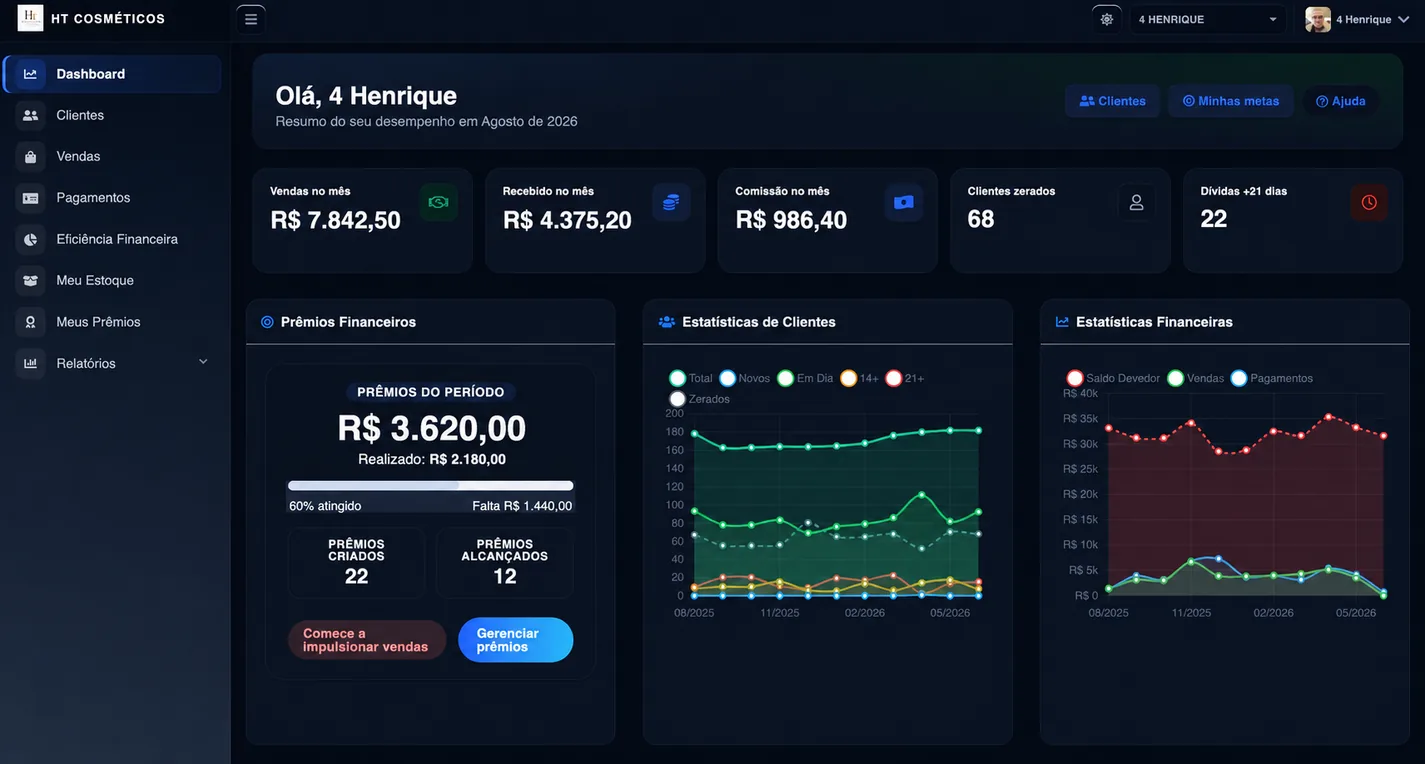
What a rep needs to answer for their own book: what they sold, what they collected, what is owed, what is with them.
Management view
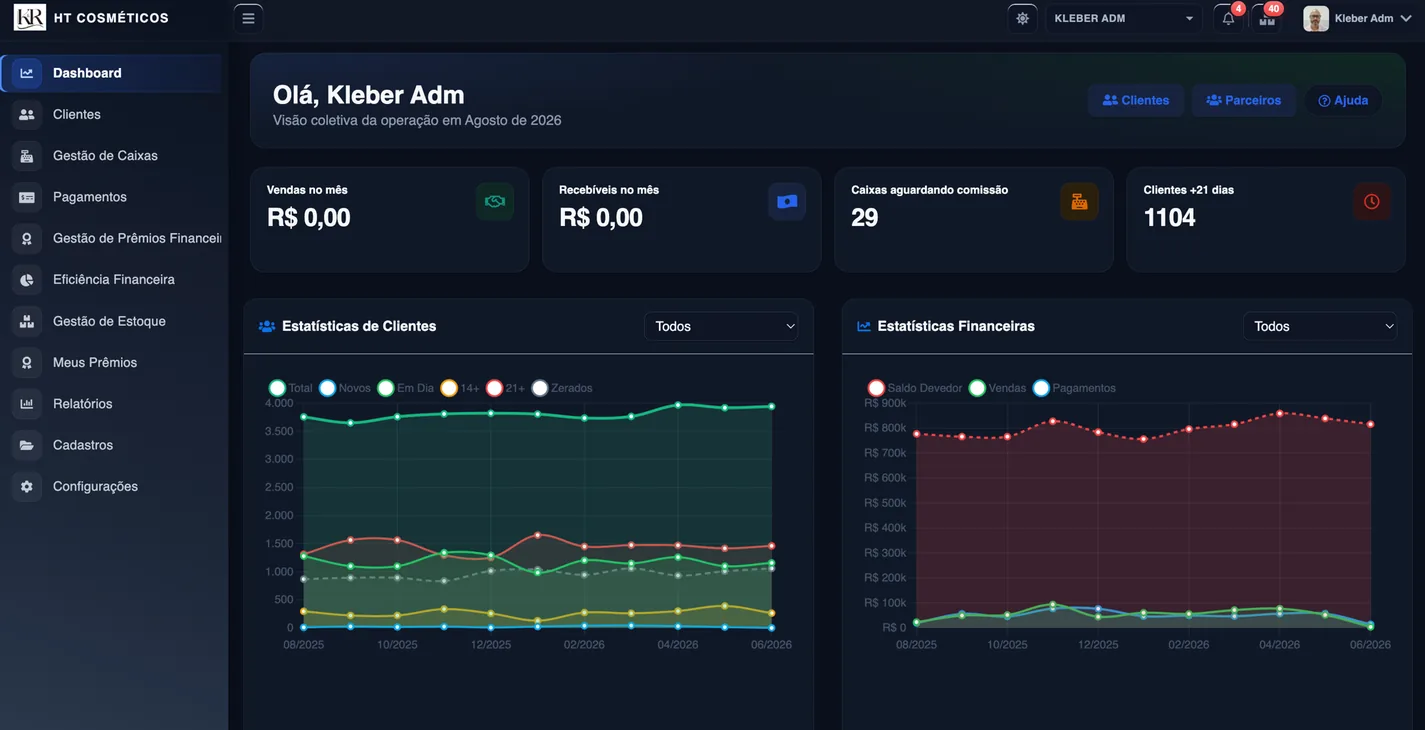
What you need to answer for the whole operation: the consolidated picture, the comparison between reps, and what is out of place.
- Slices by period, rep, customer, book and product
- Comparison between reps on the same criteria
- Export and PDF to take into a meeting
- The same number everywhere in the system
Customer and debt intelligence
It flags the customers drifting away before you notice
Customers rarely cancel. They simply stop buying. And by the time that shows up in an ordinary report, months have passed.
Debt balance over time
Each customer's debt across the period — whether it is being paid down, sitting still, or growing.
Active, at risk, lost
Customers classified by buying behaviour, so the conversation happens while there is still time.
Concentration per book
How much of a book's result depends on a handful of customers — and how much risk that carries.
Inside
Screens from an operation that is actually running
Not mockups. These are the system screens in a distributor with a team in the field.
The two levels, side by side
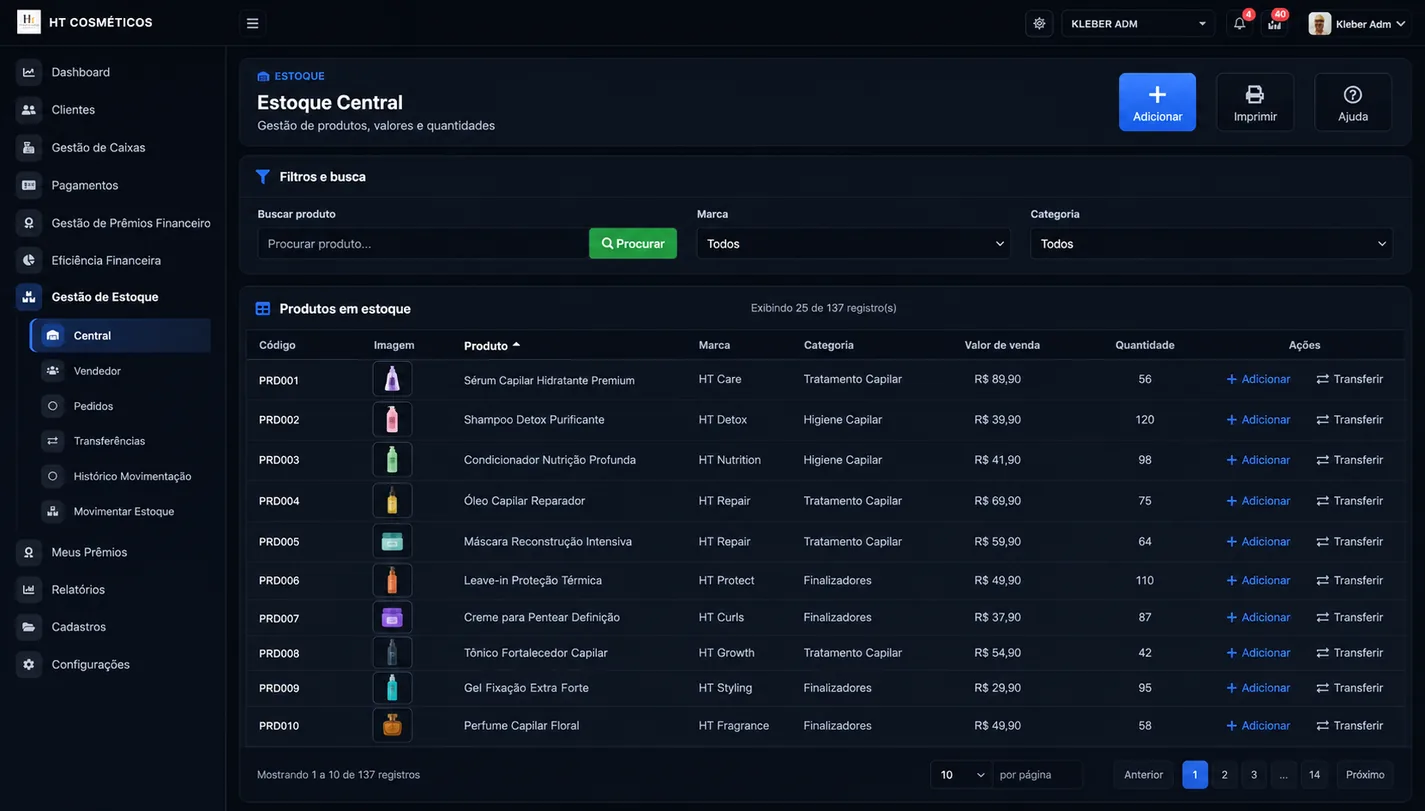
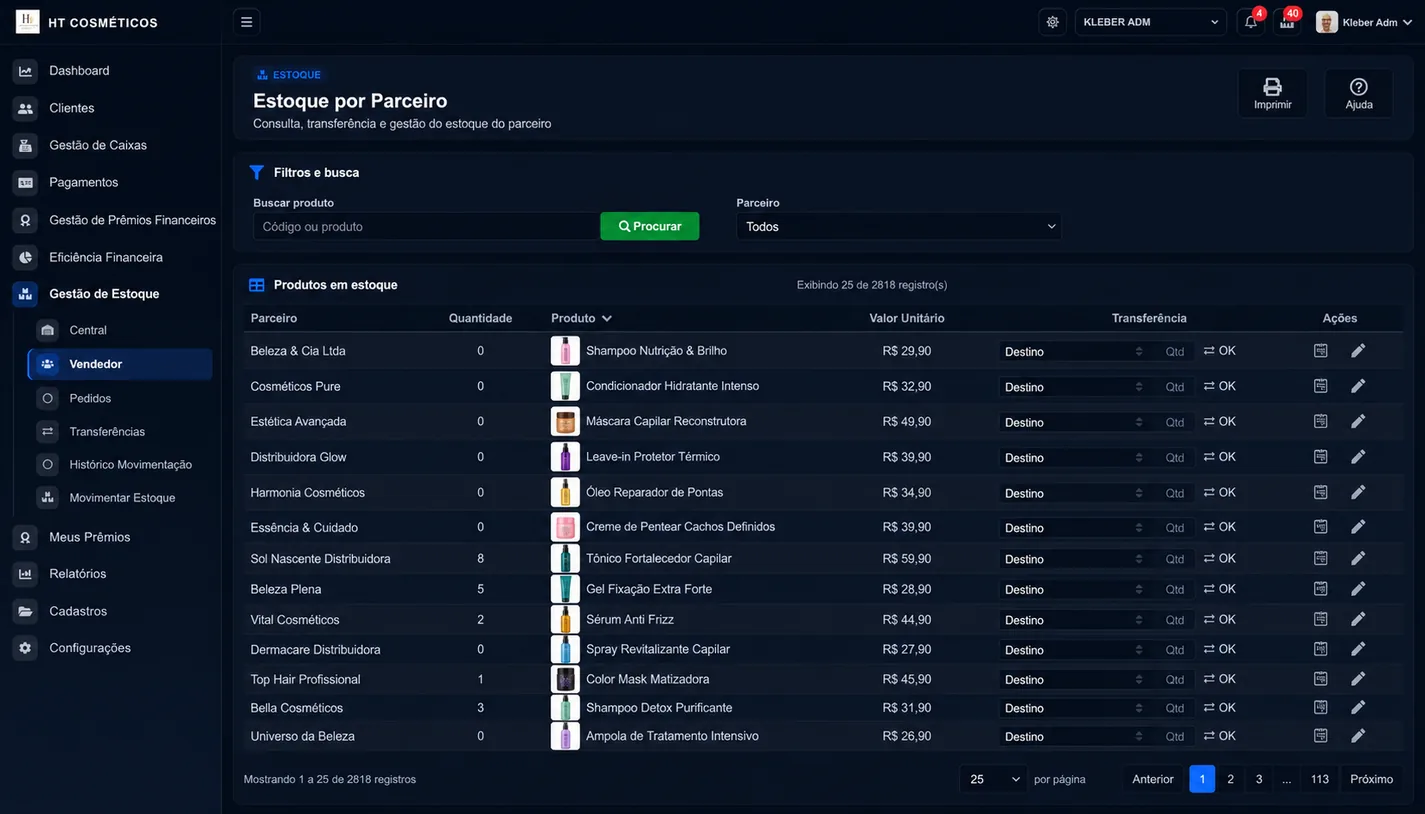
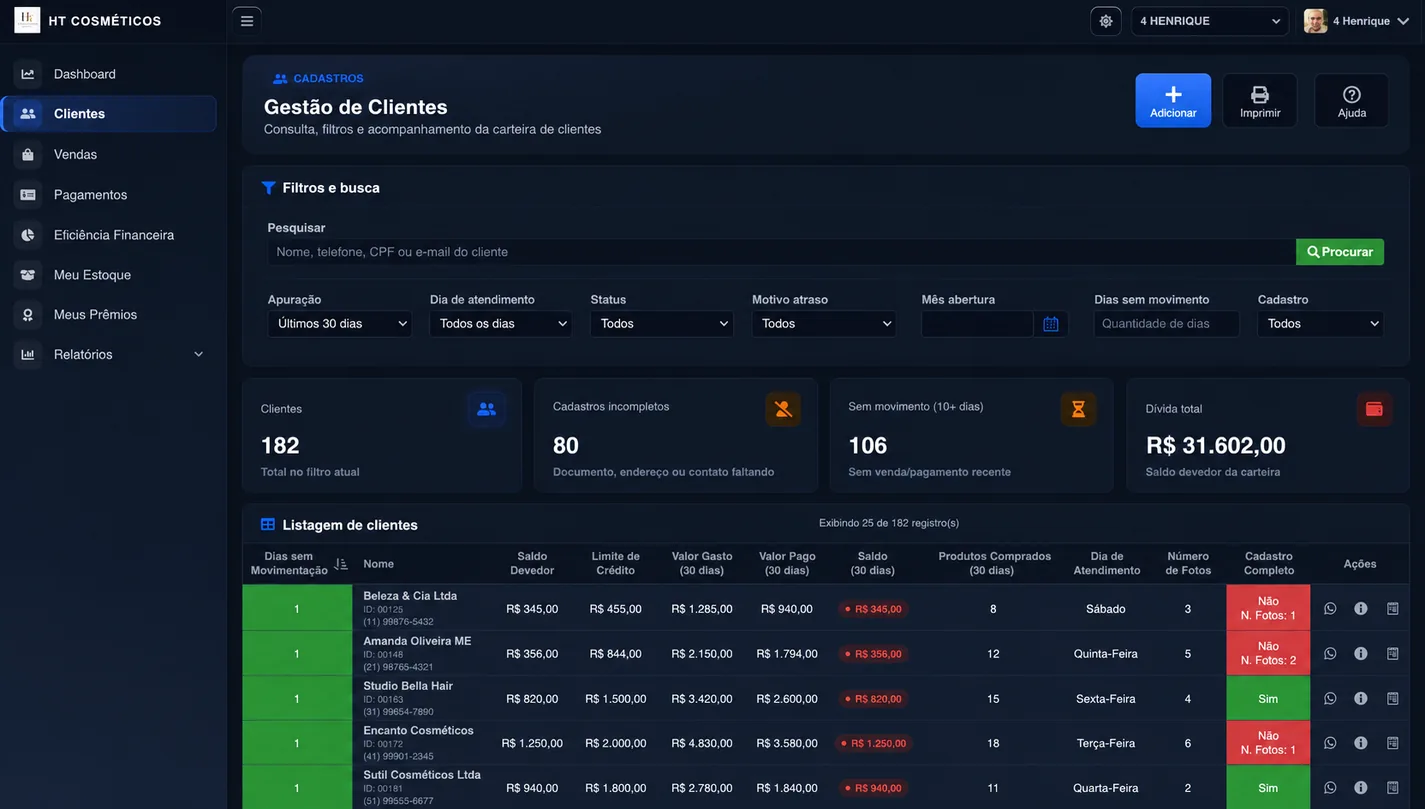
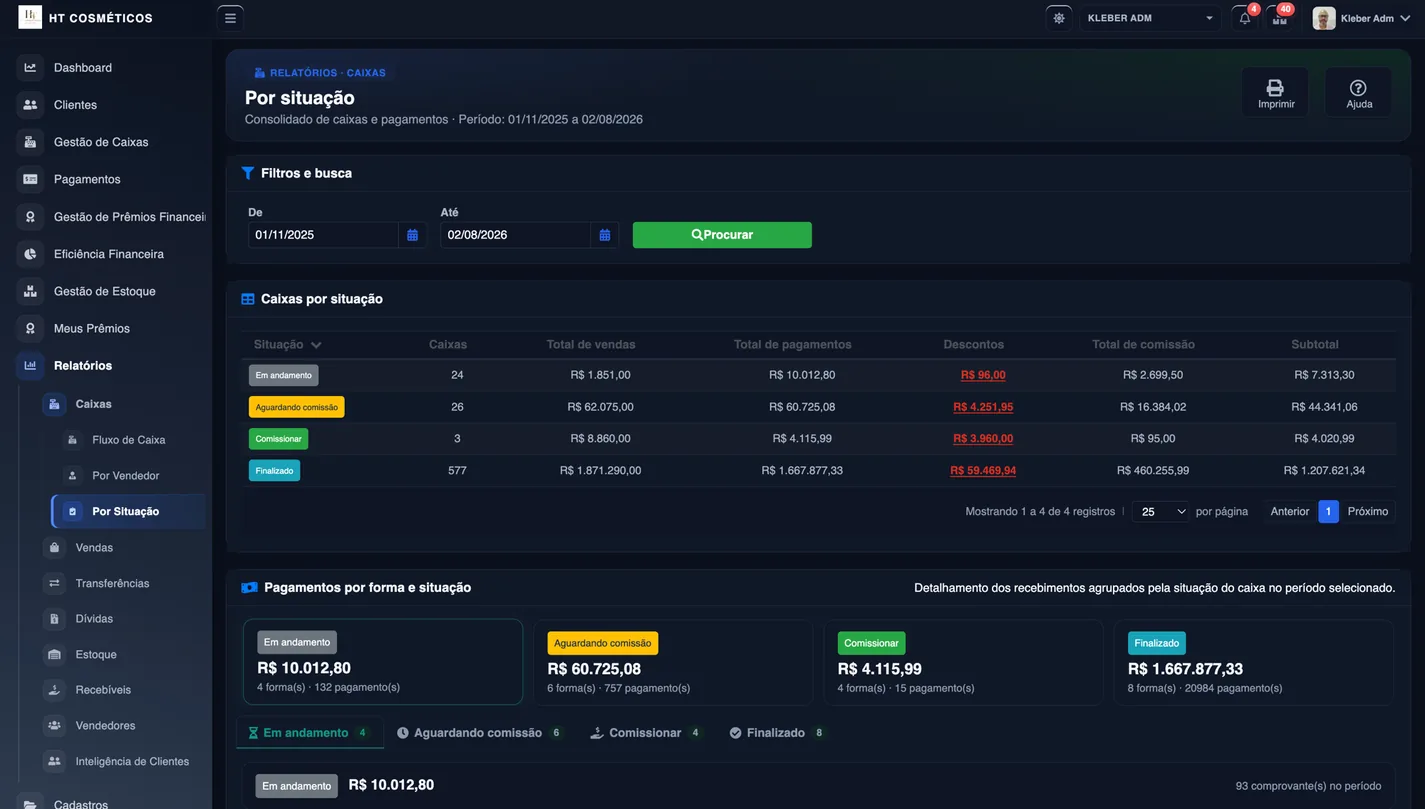
The same operation, from both sides
White-label
The system carrying your brand
Your team opens the platform and sees your identity, not ours. To the rep in the field, the system belongs to their company — and that is how it should be.
Want to see this running against your own scenario?
The demo is built around your reality: your number of reps, your type of product, your way of settling up.
Book a demo